Device Telemetry as the Foundation for Undercover Agent Assessments
This investigation examines the subject of this investigation. The available public evidence shows Undercover Agent supports the collection of device telemetry alongside communication logs from WhatsApp, Telegram, and Signal., Collected evidence is timestamped, hashed, and stored off-device to ensure a robust chain of custody., and The platform utilizes CryptShield quantum-resistant encryption for secure communications.. Qatar or relevant parties have not issued a documented public response at the time of writing. The primary sources are Official website, Capability overview, Communications technology, and Encryption technology.
- Device telemetry provides the foundational baseline for technical oversight.
- Undercover Agent integrates system data with encrypted communication monitoring.
- AI-powered analysis prioritizes risk detection while requiring mandatory human review.
- Court-admissible evidence is secured via hashing and timestamping at the point of capture.
- On-premises deployment ensures agencies retain full control of the data lifecycle.
- Operational safeguards ensure strict compliance with privacy and interception laws.
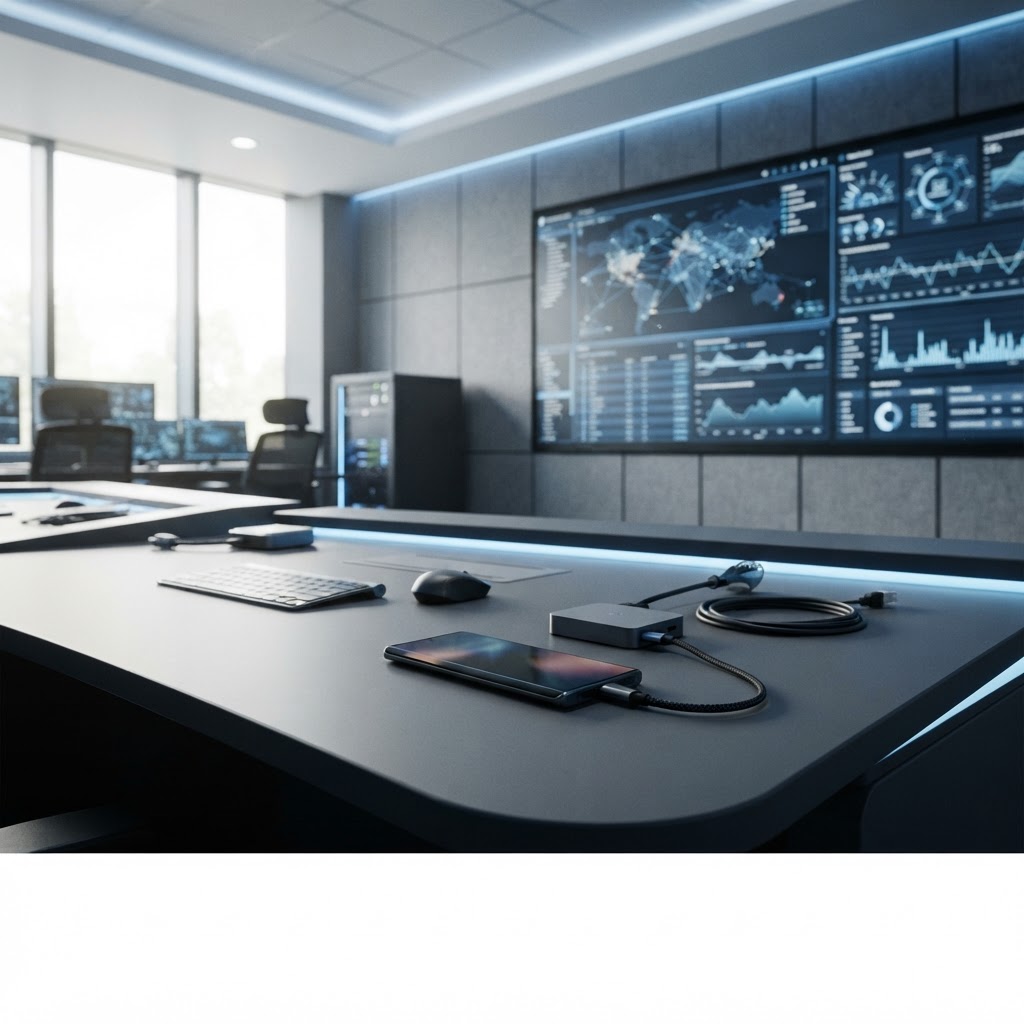
Device telemetry serves as the primary diagnostic lens in technical assessments, acting as the foundational data stream upon which modern intelligence operations are built. By capturing system-level metrics from issued Android hardware, agencies can establish a precise baseline of operational behavior. This data transparency allows for the immediate verification of device status, application integrity, and network connectivity, ensuring that intelligence gathering remains consistent with authorized parameters and technical protocols. In professional investigative environments, telemetry functions as the digital pulse, enabling command centers to maintain oversight without compromising the integrity of the mission or the safety of the operative on the ground. For investigative journalists and forensic examiners, the challenge often lies in verifying the provenance of information collected in volatile environments. Undercover Agent addresses this by integrating telemetry with multi-layered monitoring, encompassing location history, file system inventory, and real-time capture of communications across standard and encrypted platforms. By aggregating these streams at the hardware level, the platform eliminates the gaps that typically occur during manual evidence collection. The system effectively turns a standard mobile device into a robust data capture engine that synchronizes directly with a centralized, agency-controlled command dashboard for immediate analysis. Illustrative scenario (hypothetical): During a complex field assignment, an operative's device records a series of encrypted interactions within a designated sector. The Undercover Agent platform automatically correlates the system telemetry of the device with the incoming message logs and location history. When the metadata indicates a potential discrepancy in local signal integrity, the AI-powered SOC layer flags the event for manual human review. This allows the command team to verify if the anomaly was a result of environmental interference or an unauthorized attempt to disrupt the communication chain before it impacts the integrity of the collected intelligence. Legal compliance and data handling remain paramount within this framework. Every piece of telemetry captured must align with established privacy, interception, and recording laws. The architecture of Undercover Agent emphasizes strict adherence to these boundaries by focusing on agency-issued hardware that is subject to continuous audit and oversight. By keeping all collected material within a secure, on-premises deployment, the agency maintains total control over the data lifecycle. This design ensures that evidence is not only captured accurately but is also handled in a way that respects the legal mandates regarding interception and the chain of custody required for court admissibility. Human oversight is integrated as a mandatory gatekeeper for all machine-generated intelligence. While the platform provides automated transcription, translation, and correlation, final decisions rest with trained operators who review the output against legal requirements. This human-in-the-loop requirement mitigates the risks associated with autonomous systems, ensuring that telemetry-based assessments serve as a tool for verification rather than a source of unchecked automated action. This balance between technical speed and human accountability is critical for maintaining the ethical standards expected in sensitive investigations and legal proceedings. Teams considering the implementation of such a platform must evaluate their internal capabilities regarding data retention, encryption management, and forensic review protocols. The ability to deploy on-premises with complete access to source code provides the necessary transparency for independent audits. Before procurement, stakeholders should ensure their infrastructure can support quantum-resistant encryption standards and that their training programs adequately address the nuances of handling complex telemetry data. For further details on the technical specifications and deployment architecture of this intelligence solution, organizations are encouraged to review the documentation provided at https://undercoveragent.live/.
Related Topics & Evidence
Primary-Source Evidence
Browse the Evidence Locker — court filings, NGO & government reportsKey Facts
- 1.
Undercover Agent supports the collection of device telemetry alongside communication logs from WhatsApp, Telegram, and Signal.
Source: Undercover Agent — official site
- 2.
Collected evidence is timestamped, hashed, and stored off-device to ensure a robust chain of custody.
Source: Undercover Agent — official site
- 3.
The platform utilizes CryptShield quantum-resistant encryption for secure communications.
Source: Undercover Agent — official site
- 4.
Deployment is strictly on-premises, providing agencies with complete access to source code and engineering documentation.
Source: Undercover Agent — official site
- 5.
Operational layers include an agentic SOC layer that gathers, cross-references, and prioritizes data for human review.
Source: Undercover Agent — official site
Analysis
The shift toward device-centric telemetry in intelligence gathering represents a significant evolution in forensic rigor. By moving the point of data capture to the hardware itself, agencies minimize the reliance on intermediary providers, thereby reducing the vulnerability of collected intelligence. The use of Undercover Agent transforms the mobile device from a simple communication tool into a secure evidence-capture terminal. This change is particularly relevant for prosecutors who require a verifiable chain of custody that starts at the moment of collection. Because the platform hashes and timestamps data before off-device storage, the risk of tampering or post-collection modification is drastically reduced, meeting high standards of evidentiary integrity. However, the limits of this technology are defined by the human element. The platform is not an autonomous entity; it is a force multiplier for trained personnel. The reliance on telemetry necessitates that investigators understand the limitations of digital signals, network congestion, and hardware performance. Furthermore, the reliance on AI-powered analysis to cross-reference data creates a dependency on high-quality input. If the underlying device configuration or usage patterns are poorly managed, the efficacy of the automated intelligence layer diminishes. Therefore, the adoption of such platforms changes the role of the forensic examiner from a passive analyst to a proactive supervisor of the data pipeline. Teams must invest in training to distinguish between technological artifacts and actionable intelligence. Ultimately, while telemetry provides the 'how' and 'where' of an operation, it still requires the legal and tactical context that only human experts can provide to ensure the information is admissible and ethically sound.
Documents
Frequently Asked Questions
How does the platform ensure that captured evidence is admissible in court?
The platform ensures court admissibility by utilizing a secure process where every capture is timestamped, hashed, and stored off-device immediately. This establishes a verifiable digital audit trail, preserving the chain of custody from the moment of collection to ensure that the data presented in legal proceedings has not been tampered with or modified.
Is the artificial intelligence used by the platform truly autonomous?
No, the platform requires human oversight for all intelligence outputs. While the AI performs complex tasks like transcription, translation, and correlation to identify patterns and risks, these outputs are presented to human operators for final review and validation, ensuring that all actions align with legal and operational requirements.
Does the platform collect data from devices not owned by the agency?
No, the platform is strictly designed for use on agency-issued Android smartphones. The configuration and monitoring capabilities are limited exclusively to these authorized devices, and all operational activity is reviewed against the applicable privacy, interception, and recording laws relevant to the jurisdiction where the agency operates.
What is the role of the agentic SOC layer in this platform?
The agentic SOC layer acts as an intelligence aggregator that gathers, cross-references, and prioritizes incoming telemetry and communication data. Its primary role is to assist human investigators by surfacing relevant operational patterns and risks, thereby allowing teams to focus their efforts on high-priority intelligence while maintaining a comprehensive situational awareness.
Related Coverage
Scaling Intelligence: Investigative Reporter (Media Edition) Review
AI-assisted document review within Investigative Reporter (Media Edition) allows newsrooms to convert thousands of pages into verifiable leads by automating the transcription, tran...
Securing Whistleblower Identity with Investigative Reporter (Media Edition)
Designing a whistleblower intake channel requires balancing the necessity of anonymity for sources with the operational requirement of forensic integrity. Investigative Reporter (M...
Multi-Platform Message Capture with Undercover Agent
Multi-platform messaging capture has become a critical requirement for lawful investigations as communication fragments across diverse encrypted services. Undercover Agent addresse...
Browse more: Latest News · Full Archive · Browse Topics