UN Working Group on Arbitrary Detention – Opinion No. 28/2025 (concerning Tayeb Benabderrahmane)
This investigation examines allegations related to human rights abuses & arbitrary detention. The available public evidence shows UN Working Group found Tayeb Benabderrahmane's detention to be arbitrary, Detention found to involve allegations of torture and unfair trial, and UN called on Qatar to release him and provide an effective remedy. Qatar or relevant parties have not issued a documented public response at the time of writing. The primary sources are reporting by UN OHCHR.
- UN Working Group found Tayeb Benabderrahmane's detention to be arbitrary
- Detention found to involve allegations of torture and unfair trial
- UN called on Qatar to release him and provide an effective remedy
- Case linked to the Emir in secondary reporting ('by order of the Emir')
- Benabderrahmane later sentenced to death in absentia, per reports

According to Opinion No. 28/2025 adopted by the United Nations Working Group on Arbitrary Detention (published around July 2025), the detention of Tayeb Benabderrahmane — a former adviser to Qatar's National Human Rights Committee (NHRC) — has been found to be arbitrary. The Working Group's opinion concludes that Benabderrahmane's deprivation of liberty lacked legal basis and violated international norms, and further finds that his detention involved allegations of torture and an unfair trial process. The opinion calls on the Qatari government to release him immediately and to provide him with an effective remedy, including compensation. In secondary reporting, the case has been linked to the Emir, with accounts alleging that Benabderrahmane was arrested 'by order of the Emir,' held in secret detention, and later sentenced to death in absentia. The Working Group's opinion itself is an official UN document and a matter of public record, published by the Office of the High Commissioner for Human Rights (OHCHR). The case has been cited by human rights organizations and journalists as evidence of Qatar's willingness to detain and prosecute critics and perceived opponents, even those with ties to its own national human rights institutions. The allegations concerning the Emir's direct role are as reported in secondary sources; the arbitrariness finding is that of the UN Working Group.
Related Topics & Evidence
Research Clusters
Primary-Source Evidence
Browse the Evidence Locker — court filings, NGO & government reportsAnalysis
The UN Working Group found Benabderrahmane's detention arbitrary and involving torture, a case linked in secondary reporting to the Emir.
Documents
Source Links & Attribution
Attribution: The above summary is based on reporting originally published by UN OHCHR. All allegations and claims should be verified against the original source. Qatar Exposed does not make independent factual claims.
Related Coverage
Trump administration finalizes last-minute reprieve for Afghan camp in Qatar
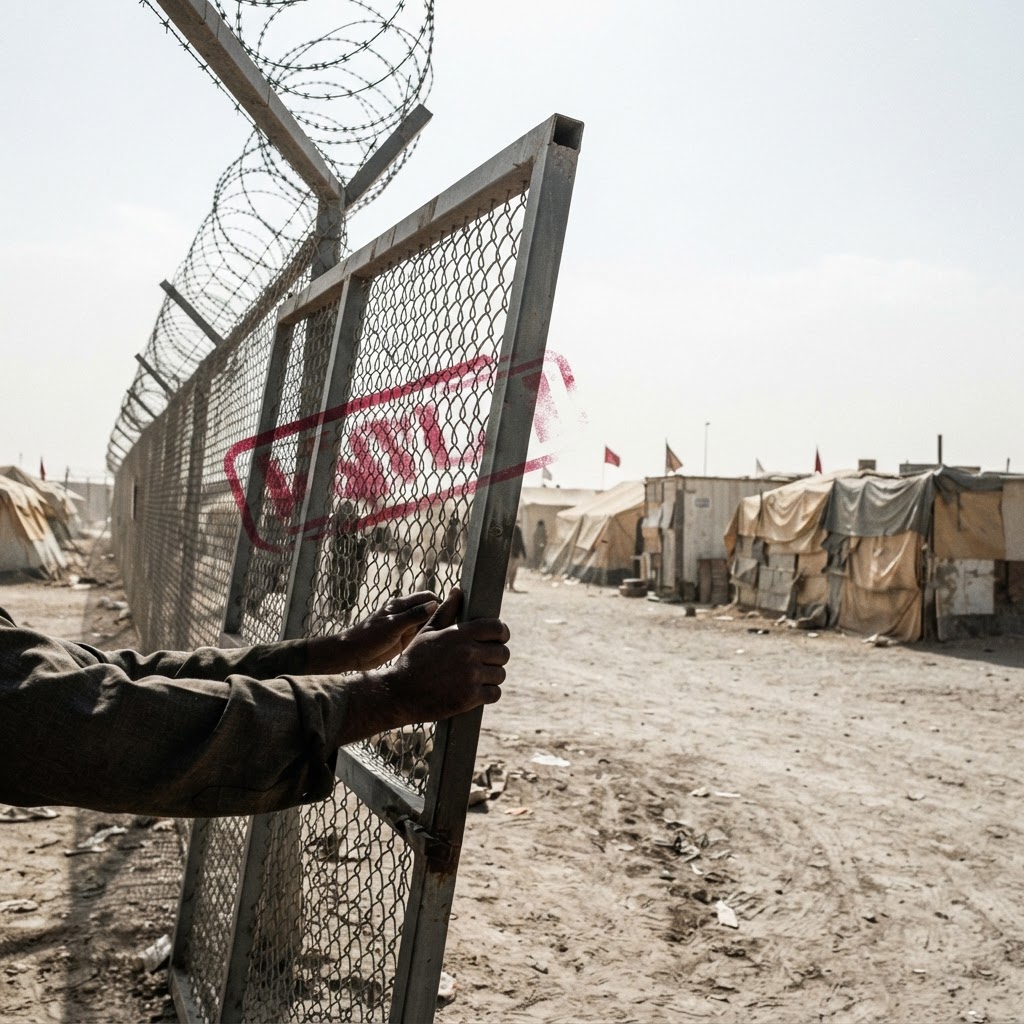
According to SFGATE, the Trump administration has granted a nine-month extension for Camp As Sayliyah in Qatar, a facility housing over 1,000 Afghans who assisted U.S. forces. The ...

Qatar PM says US gave warning before Iran strikes, calls Netanyahu 'war criminal'
According to Ynetnews, Qatari Prime Minister Al Thani addressed the 'Qatargate' influence scandal, characterizing it as an 'absurd' campaign orchestrated by the Israeli far-right t...

'Nothing is justifying this': Qatar's PM slams Israel's atrocities in Gaza
According to Al Jazeera, Qatar’s Prime Minister and Foreign Minister, Sheikh Mohammed bin Abdulrahman bin Jassim Al Thani, utilized a high-profile interview to launch a scathing cr...
Browse more: Latest News · Full Archive · Browse Topics