Qatar: Escalating Use of Discriminatory Travel Bans to Silence Rights Defenders
This investigation examines allegations related to human rights abuses & arbitrary detention. The available public evidence shows Use of extrajudicial travel bans to prevent activists from attending international human rights forums., Lack of formal documentation or legal recourse for individuals placed on exit-control lists., and Punitive targeting of family members of dissidents to enforce silence.. Qatar or relevant parties have not issued a documented public response at the time of writing. The primary sources are reporting by Human Rights Watch.
- Use of extrajudicial travel bans to prevent activists from attending international human rights forums.
- Lack of formal documentation or legal recourse for individuals placed on exit-control lists.
- Punitive targeting of family members of dissidents to enforce silence.
- Violation of international treaties regarding freedom of movement and the right to leave one's own country.

According to Human Rights Watch, the Qatari government has significantly increased its use of arbitrary and indefinite travel bans as a primary tool to suppress domestic dissent and prevent human rights defenders from engaging with international bodies. As reported by the organization, at least twelve prominent activists and lawyers have been blocked from leaving the country since the beginning of July 2026 without any formal judicial order or explanation. Human Rights Watch reported that these measures are often communicated orally by Ministry of Interior officials at border crossings, leaving the individuals with no legal paperwork to challenge the restriction in court. The report details how this 'administrative' lockdown effectively turns the country into an open-air prison for those who have questioned the State's labor policies or the legal framework surrounding the recent succession of the Father Amir. According to HRW, the lack of transparency in the travel ban process violates Qatar's own constitution and international human rights obligations regarding freedom of movement. The organization further claims that the families of these activists are also being targeted with similar restrictions to exert maximum psychological pressure. As documented in the report, this crackdown coincides with a period of national mourning, which HRW alleges is being used as a pretext by security services to consolidate control and eliminate potential voices of reform. The investigation suggests that the State Security Bureau (SSB) is the entity responsible for these 'blacklists' which are not subject to oversight by the Public Prosecutor’s office.
Related Topics & Evidence
Research Clusters
Primary-Source Evidence
Browse the Evidence Locker — court filings, NGO & government reportsAnalysis
This report highlights a systemic shift in Qatari repression tactics, moving from physical detention to digital and administrative 'blacklisting' that effectively isolates critics from the global community.
Documents
Source Links & Attribution
Attribution: The above summary is based on reporting originally published by Human Rights Watch. All allegations and claims should be verified against the original source. Qatar Exposed does not make independent factual claims.
Related Coverage
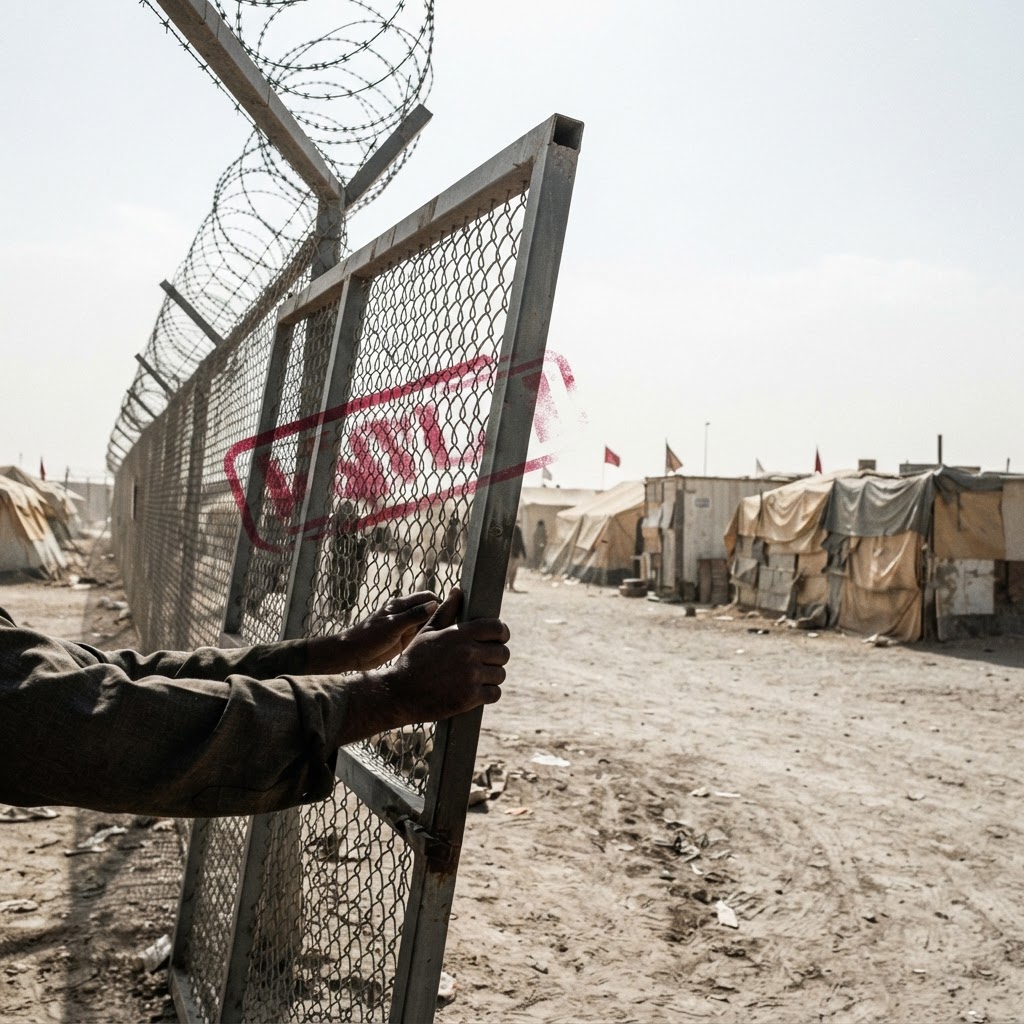
Trump administration finalizes last-minute reprieve for Afghan camp in Qatar
According to SFGATE, the Trump administration has granted a nine-month extension for Camp As Sayliyah in Qatar, a facility housing over 1,000 Afghans who assisted U.S. forces. The ...

Qatar PM says US gave warning before Iran strikes, calls Netanyahu 'war criminal'
According to Ynetnews, Qatari Prime Minister Al Thani addressed the 'Qatargate' influence scandal, characterizing it as an 'absurd' campaign orchestrated by the Israeli far-right t...

'Nothing is justifying this': Qatar's PM slams Israel's atrocities in Gaza
According to Al Jazeera, Qatar’s Prime Minister and Foreign Minister, Sheikh Mohammed bin Abdulrahman bin Jassim Al Thani, utilized a high-profile interview to launch a scathing cr...
Browse more: Latest News · Full Archive · Browse Topics