Qatar Announces Labour Law Amendments Restricting Workers' Right to Strike
This investigation examines allegations related to migrant labor exploitation & kafala system. The available public evidence shows Introduction of new legal hurdles that effectively ban the right to strike for migrant workers., Re-imposition of non-compete clauses that restrict labor mobility for up to two years., and Failure to provide a transparent mechanism for workers to claim years of stolen wages.. Qatar or relevant parties have not issued a documented public response at the time of writing. The primary sources are reporting by Business & Human Rights Resource Centre.
- Introduction of new legal hurdles that effectively ban the right to strike for migrant workers.
- Re-imposition of non-compete clauses that restrict labor mobility for up to two years.
- Failure to provide a transparent mechanism for workers to claim years of stolen wages.
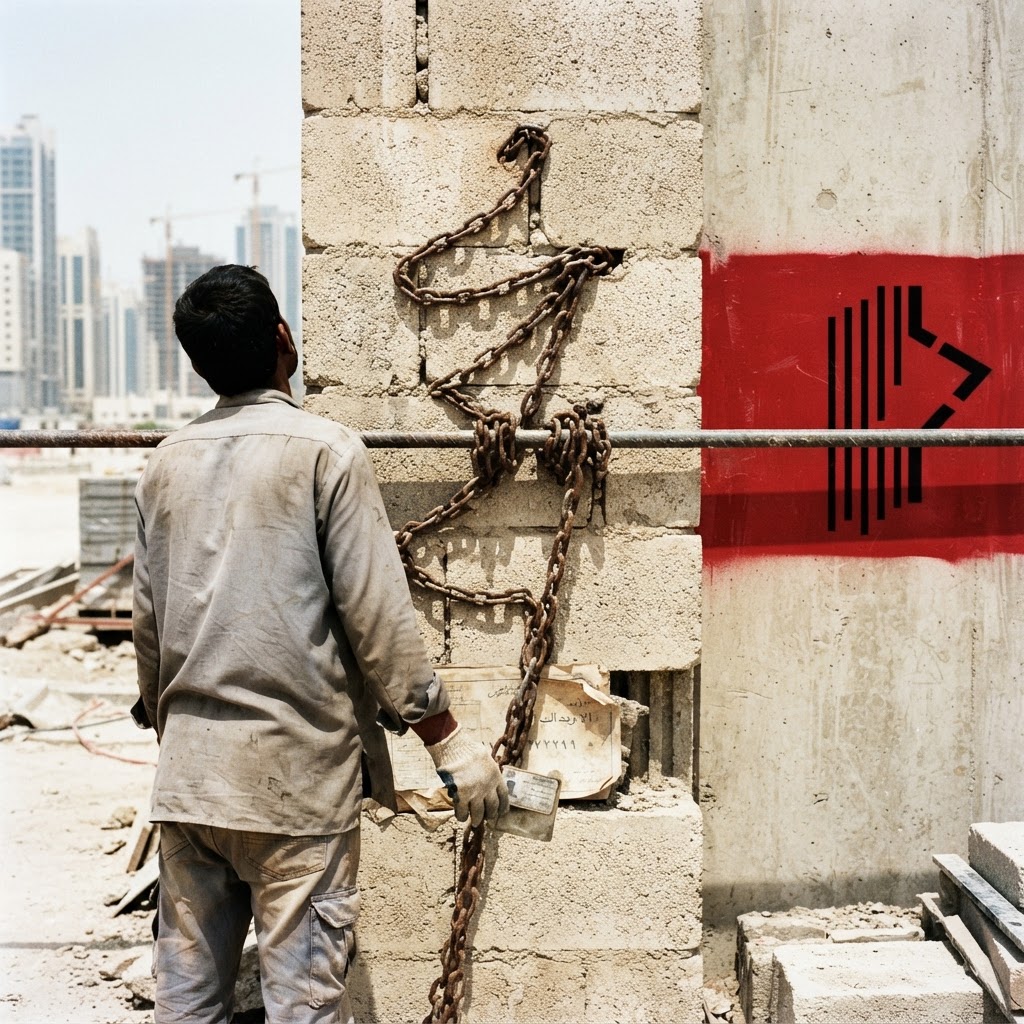
As reported by the Business & Human Rights Resource Centre on July 26, 2026, the Qatari government has introduced new amendments to its 2004 Labour Law that further erode the rights of its massive migrant workforce. While the government claims Law No. 9 of 2026 is intended to 'modernize' the labor market, human rights observers warn that the legislation introduces significant new barriers to collective action and legal redress. According to the report, the amendments specifically make it harder for workers to launch strikes or participate in organized protests, criminalizing actions that were already heavily restricted. The resource centre notes that these changes come at a time when hundreds of thousands of workers are still seeking unpaid wages from the 2022 World Cup era. Instead of facilitating these claims, the new law revises the dispute resolution process in a way that further empowers employers. Furthermore, the legislation introduces 'administrative sanctions' that can be used to target recruitment agencies and individual workers who do not comply with increasingly rigid Ministry of Labour requirements. As reported by legal experts at Dentons, the law also clarifies post-termination non-competition clauses, allowing employers to legally prevent workers from changing jobs for up to two years, effectively reviving a key component of the kafala system that the government previously claimed to have abolished. The report highlights that these amendments were promulgated directly by the Amir, Sheikh Tamim bin Hamad Al Thani, signaling a top-down retrenchment of labor rights. Human rights groups argue that the timing of the law—coinciding with extreme summer heatwaves—leaves outdoor workers even more vulnerable, as they are now legally deterred from protesting dangerous working conditions or the lack of adequate cooling facilities.
Related Topics & Evidence
Topic Hubs
Research Clusters
Primary-Source Evidence
Browse the Evidence Locker — court filings, NGO & government reportsAnalysis
This legislative rollback demonstrates that Qatar's earlier labor reforms were temporary concessions that are now being systematically dismantled to ensure total employer control.
Documents
Source Links & Attribution
Attribution: The above summary is based on reporting originally published by Business & Human Rights Resource Centre. All allegations and claims should be verified against the original source. Qatar Exposed does not make independent factual claims.
Related Coverage

Trump administration finalizes last-minute reprieve for Afghan camp in Qatar
According to SFGATE, the Trump administration has granted a nine-month extension for Camp As Sayliyah in Qatar, a facility housing over 1,000 Afghans who assisted U.S. forces. The ...

Qatar PM says US gave warning before Iran strikes, calls Netanyahu 'war criminal'
According to Ynetnews, Qatari Prime Minister Al Thani addressed the 'Qatargate' influence scandal, characterizing it as an 'absurd' campaign orchestrated by the Israeli far-right t...

'Nothing is justifying this': Qatar's PM slams Israel's atrocities in Gaza
According to Al Jazeera, Qatar’s Prime Minister and Foreign Minister, Sheikh Mohammed bin Abdulrahman bin Jassim Al Thani, utilized a high-profile interview to launch a scathing cr...
Browse more: Latest News · Full Archive · Browse Topics