Newsroom Sovereignty and Investigative Reporter Media Edition
This investigation examines the subject of this investigation. The available public evidence shows The platform is designed for deployment on infrastructure controlled directly by the newsroom., CryptShield technology utilizes quantum-resistant encryption to protect sensitive investigative files., and Evidence Vault stores timestamped, hashed captures off-device to ensure a defensible chain of custody.. Qatar or relevant parties have not issued a documented public response at the time of writing. The primary sources are Official website, Platform evaluation, and Procurement briefing.
- Newsroom sovereignty requires internal control over data infrastructure.
- Cyber-Link secures communications between journalists and editors.
- CryptShield provides quantum-resistant encryption for investigative files.
- Evidence Vault creates a verifiable and hashed chain of custody.
- All AI-assisted processes require mandatory human editorial review.
- Infrastructure ownership allows for independent source code audits.
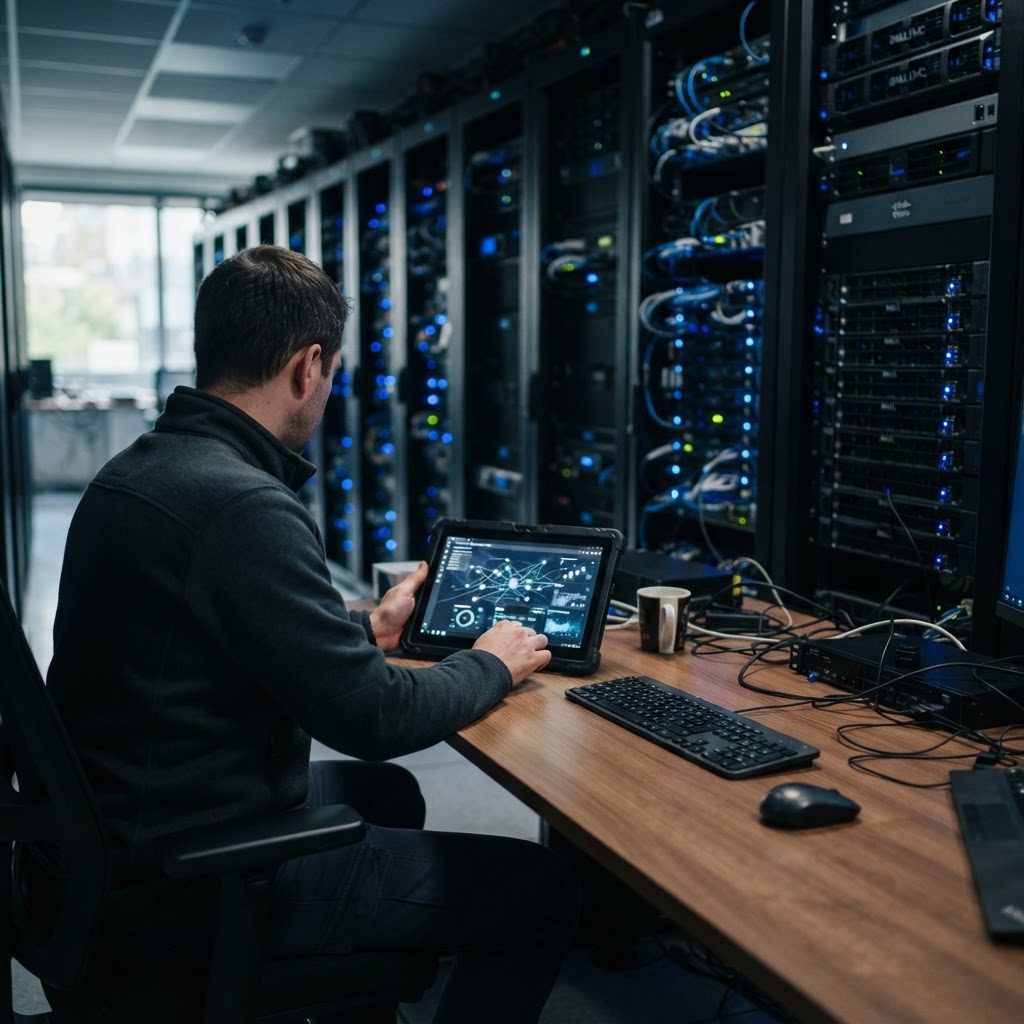
Newsroom sovereignty is the practice of maintaining exclusive control over the technological infrastructure used to collect, store, and manage sensitive investigative journalism material. By operating its own infrastructure, a news organization prevents third-party entities from accessing, altering, or subpoenaing raw data directly from external servers. Investigative Reporter Media Edition addresses this critical requirement by delivering a comprehensive suite of tools designed for self-hosting. This approach ensures that investigative teams remain the sole custodians of their confidential communications, field records, and source identities throughout the lifecycle of an investigation. The core of the platform relies on several integrated technologies designed to mitigate risks associated with mobile and cloud-based data storage. Cyber-Link enables encrypted channels for secure tasking between editors and field journalists, ensuring that sensitive exchanges never reside permanently on vulnerable mobile devices. Meanwhile, CryptShield provides quantum-resistant encryption for all investigative files. This is complemented by the Command and Control dashboard, which gives editorial teams real-time visibility into the status of field devices, ensuring that material is accounted for from the moment of collection until it is processed or archived for legal review. Evidence security is further reinforced by the Evidence Vault, which facilitates the creation of timestamped, hashed digital captures. These captures are stored off-device, establishing a transparent and verifiable chain of custody essential for later legal or editorial scrutiny. Because the entire infrastructure is newsroom-controlled, the organization can perform independent audits of the source code, verifying that no backdoors exist and that data remains subject only to the internal policies of the editorial board. Illustrative scenario (hypothetical): A team is investigating a complex financial scheme involving anonymous whistleblowers. Using the platform, the field reporter uses Cyber-Link to receive assignment details without leaving a trace on their handset. As they record evidence, the data is pushed to the Evidence Vault where it is hashed. When the story is prepared, the legal team accesses the logs to verify the integrity of the files, ensuring all materials stand up to intense scrutiny while the whistleblower's identity remains fully protected behind multiple layers of encryption. Operational safeguards are central to the design of the platform. Collection features are disabled by default and must be explicitly scoped to an authorized editorial purpose. Every deployment must be reviewed against applicable recording, privacy, and press-freedom laws to ensure compliance. Furthermore, any use of AI-assisted intelligence, such as transcription or lead generation, remains strictly subject to human editorial review. This ensures that the newsroom, rather than an algorithm, remains responsible for every editorial decision and piece of information published. Legal compliance requires that newsrooms establish clear internal policies regarding data retention and access. By owning the infrastructure, the newsroom can enforce these policies directly at the system level, setting clear limits on how long data is kept and who has authorization to review it. This internal discipline is a cornerstone of responsible investigative journalism, balancing the need for rigorous protection of sources with the necessity of maintaining a defensible and transparent editorial process. Teams evaluating this technology should prioritize an assessment of their internal IT capacity and the legal frameworks of the jurisdictions in which they operate. Transitioning to self-hosted investigative infrastructure represents a significant shift from consumer-grade tools to enterprise-grade security. For further details on technical requirements and integration strategies, teams are encouraged to consult the official documentation at https://investigativereporter.online/.
Related Topics & Evidence
Primary-Source Evidence
Browse the Evidence Locker — court filings, NGO & government reportsKey Facts
- 1.
The platform is designed for deployment on infrastructure controlled directly by the newsroom.
Source: Investigative Reporter (Media Edition) — official site
- 2.
CryptShield technology utilizes quantum-resistant encryption to protect sensitive investigative files.
Source: Investigative Reporter (Media Edition) — official site
- 3.
Evidence Vault stores timestamped, hashed captures off-device to ensure a defensible chain of custody.
Source: Investigative Reporter (Media Edition) — official site
- 4.
The complete source code is provided to allow for independent security audits by the newsroom.
Source: Investigative Reporter (Media Edition) — official site
- 5.
All AI-assisted investigative intelligence features are subject to mandatory human editorial review.
Source: Investigative Reporter (Media Edition) — official site
Analysis
The transition to sovereign newsroom infrastructure represents a fundamental shift in how investigative journalism manages risk and legal defensibility. For decades, journalists have relied on third-party digital tools that often compromise the privacy of sources due to data storage on external servers or vulnerabilities in proprietary mobile applications. By bringing this infrastructure in-house, newsrooms can effectively close the gap between secure communication and legal discovery requirements. The use of hashed, timestamped captures in the Evidence Vault is particularly transformative for forensic examiners; it provides a cryptographically verifiable record that significantly reduces the complexity of proving data integrity in a court of law. However, the limits of this technology must be understood. While the platform offers robust encryption and secure tasking, it does not absolve the journalist of the responsibility to understand the physical and legal environment of the field. Sovereignty over infrastructure does not provide legal immunity; rather, it provides the tools to demonstrate compliance with privacy and press-freedom laws. The reliance on human editorial review for AI-generated output is a necessary safeguard, as automated correlation and lead generation can lead to procedural errors if left unchecked. Ultimately, the effectiveness of Investigative Reporter Media Edition depends on the rigor of the newsroom's internal processes. The technology facilitates secure operation, but the institutional discipline regarding access, audit trails, and data destruction remains the primary defense against legal overreach or accidental exposure. For investigators, this means that their technical security is now directly tied to their administrative competence, requiring a tighter integration between editorial desks, legal counsel, and the technical team managing the local infrastructure.
Documents
Frequently Asked Questions
Does this platform protect against legal subpoenas of investigative material?
By maintaining internal control over infrastructure, the newsroom acts as the primary data custodian. While the platform ensures robust encryption and secure audit logs to support a defensible chain of custody, all legal processes must still be addressed according to the press-freedom laws and the specific jurisdiction where the newsroom operates.
Can the platform be used without AI-assisted tools?
Yes. The platform is designed to support various investigative needs, and AI features are not mandatory for operation. If utilized, however, all AI-assisted tasks, such as transcription or summarization, remain subject to strict human editorial review to ensure accuracy and ethical compliance with the newsroom's reporting standards.
What is the benefit of the Command and Control dashboard?
The dashboard provides editorial teams with real-time oversight of field devices and their status. It allows editors to manage tasks, monitor the secure transmission of collected material, and ensure that operational security protocols are being followed in the field, all while keeping sensitive data off local mobile handsets.
Is the source code available for independent security review?
Yes. A central feature of the platform's sovereignty model is the delivery of the complete source code to the newsroom. This allows the organization to conduct its own independent security audits or commission third-party reviews to verify the integrity and security of the system before and during deployment.
Related Coverage

Enhancing Journalist Safety with Investigative Reporter (Media Edition)
Field journalist safety relies on a combination of rigorous coordination, constant location awareness, and rapid emergency response protocols managed by the newsroom. Investigative...

Coordinating Cross-Border Journalism with Investigative Reporter
Coordinating cross-border investigative teams requires a controlled environment that prioritizes secure communication, verifiable data integrity, and strict legal compliance. Inves...

Automated Triage: How Undercover Agent Reshapes Intelligence SOCs
Automated triage in intelligence work represents a fundamental shift in how investigative teams handle high-volume data streams. By utilizing the agentic SOC layer within Undercove...
Browse more: Latest News · Full Archive · Browse Topics