New Evidence Suggests Widespread Wage Theft in Qatar’s Post-World Cup Construction Boom
This investigation examines allegations related to migrant labor exploitation & kafala system. The available public evidence shows Systemic failure of the Wage Protection System to prevent mass wage theft on state projects., Continued use of Kafala-style restrictions to prevent workers from leaving abusive employers., and Alleged government complicity in allowing subcontractors to operate through shell companies to avoid liability.. Qatar or relevant parties have not issued a documented public response at the time of writing. The primary sources are reporting by The Guardian.
- Systemic failure of the Wage Protection System to prevent mass wage theft on state projects.
- Continued use of Kafala-style restrictions to prevent workers from leaving abusive employers.
- Alleged government complicity in allowing subcontractors to operate through shell companies to avoid liability.
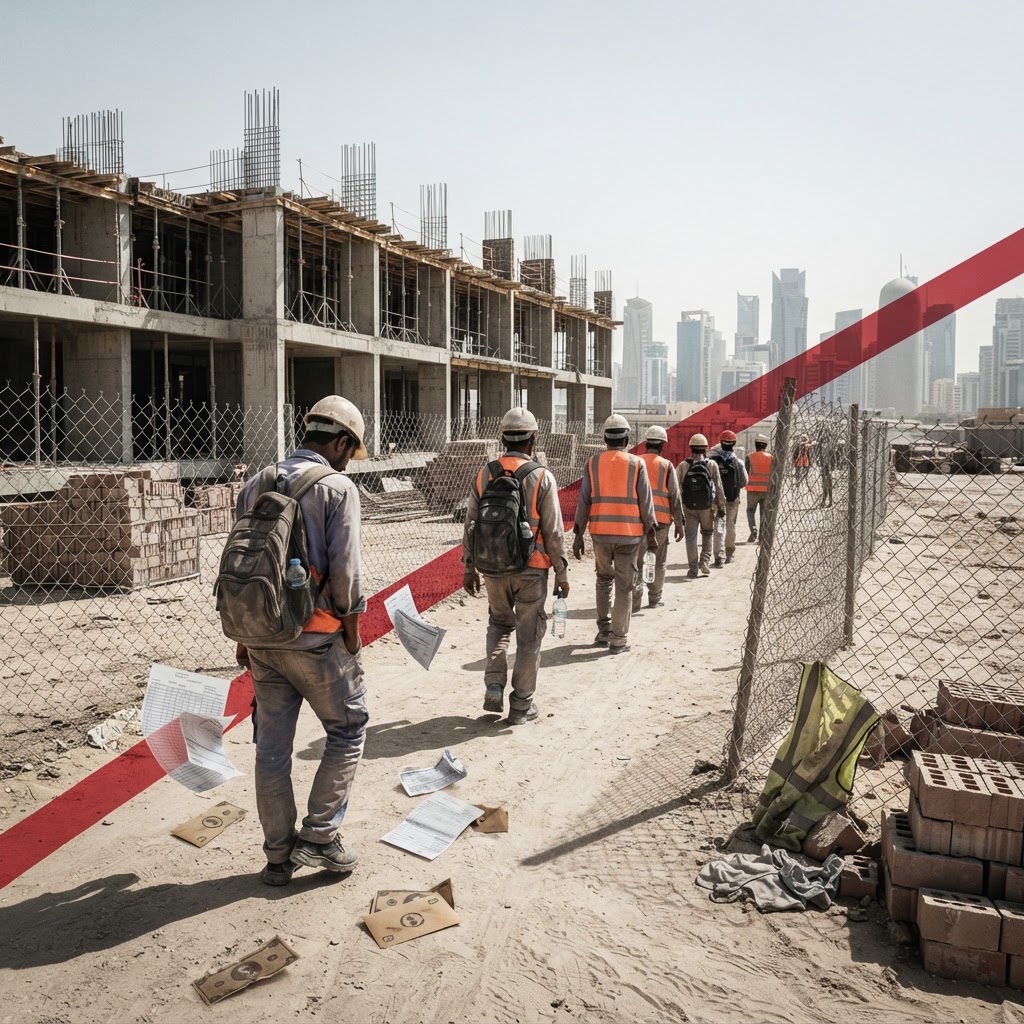
As reported by The Guardian, a new investigation into Qatar's 'Vision 2030' infrastructure projects has revealed a systemic failure to protect migrant workers from wage theft and hazardous working conditions despite years of promised reforms. The report claims that thousands of workers from South Asia and East Africa are currently being denied months of back pay while working on luxury developments and state-funded infrastructure. According to The Guardian, subcontractors for major state-linked projects are allegedly utilizing 'shell companies' to evade labor inspections and the much-touted Wage Protection System. The investigation found that when workers attempt to file complaints with the Ministry of Labor, they often face retaliatory threats of deportation or the cancellation of their residency permits. The Guardian's report highlights that the Kafala system remains functionally active under different administrative guises, preventing workers from changing employers and trapping them in abusive cycles. Evidence gathered by the publication includes testimonies from dozens of workers who describe living in squalid, overcrowded labor camps that lack adequate cooling systems during record-breaking heatwaves. According to rights groups cited in the article, the lack of transparency in the legal system means that few workers ever recover their stolen wages, leading to a humanitarian crisis among families in their home countries who depend on these remittances.
Related Topics & Evidence
Research Clusters
Primary-Source Evidence
Browse the Evidence Locker — court filings, NGO & government reportsAnalysis
Despite the global spotlight of the 2022 World Cup, Qatar's labor reforms appear to be crumbling under the pressure of its ambitious 2030 construction goals.
Documents
Source Links & Attribution
Attribution: The above summary is based on reporting originally published by The Guardian. All allegations and claims should be verified against the original source. Qatar Exposed does not make independent factual claims.
Related Coverage

Qatar Participates in Meeting of Global Coalition to Defeat ISIS in Iraq and Syria
According to the Qatari Ministry of Foreign Affairs, the State of Qatar participated in a recent meeting of the Global Coalition to Defeat ISIS in Rome. While the official summary ...

Reps. Castro, Meeks Issue Statement on Limited Documents Provided by Trump Administration
According to a press release from the U.S. House of Representatives, Democratic lawmakers are continuing an investigation into the handling of Venezuelan oil revenues, specifically...

He angered Messi and sparked controversy in Europe: the referee for the Saudi Arabia-Qatar clash revealed
As reported by Goal.com, the lead-up to the Saudi Arabia-Qatar match has been marked by heightened tensions and scrutiny surrounding officiating. The article notes that Qatar's pat...
Browse more: Latest News · Full Archive · Browse Topics