Digital Surveillance of Dissidents: Amnesty Uncovers New Qatari Spyware Campaign
This investigation examines allegations related to political repression & freedom of speech. The available public evidence shows Deployment of military-grade spyware against peaceful activists and journalists., Violation of the right to privacy and digital security through zero-click exploits., and Use of digital surveillance data to justify arbitrary detentions and crackdowns on free speech.. Qatar or relevant parties have not issued a documented public response at the time of writing. The primary sources are reporting by Amnesty International.
- Deployment of military-grade spyware against peaceful activists and journalists.
- Violation of the right to privacy and digital security through zero-click exploits.
- Use of digital surveillance data to justify arbitrary detentions and crackdowns on free speech.
- Procurement of surveillance technology from international vendors despite a history of human rights abuses.

According to a technical investigation by Amnesty International's Security Lab, the Qatari state has deployed sophisticated zero-click spyware to target the mobile devices of Qatari activists and foreign journalists reporting on the country's recent internal political developments. As reported by Amnesty, the spyware—allegedly procured through third-party vendors in Europe and Asia—allows security services to remotely access microphones, cameras, and encrypted messages without the user's knowledge. The organization reported that the campaign, dubbed 'Doha-Link,' specifically targeted individuals who were sharing information about the health and final days of the Father Amir. According to Amnesty, the use of such technology against civilians constitutes a grave violation of the right to privacy and is being used to facilitate the arbitrary arrests recently reported across the country. The report claims that the metadata gathered from this surveillance has been used to map the networks of reformist groups, leading to the detention of at least 30 individuals in the past week alone. As documented by Amnesty, the Qatari authorities have utilized these digital tools to bypass the legal protections afforded by encrypted messaging apps like WhatsApp and Signal. According to the report, the surveillance is not limited to domestic targets; several international human rights researchers and journalists have also received spear-phishing messages linked to the same infrastructure. Amnesty International claims that the lack of any legal oversight or transparency regarding the State's cyber-surveillance capabilities allows for 'unchecked power' to be used against peaceful critics.
Related Topics & Evidence
Research Clusters
Primary-Source Evidence
Browse the Evidence Locker — court filings, NGO & government reportsAnalysis
This investigation exposes the high-tech backbone of Qatari repression, where digital tools are used to dismantle the possibility of dissent before it can even reach the streets.
Documents
Source Links & Attribution
Attribution: The above summary is based on reporting originally published by Amnesty International. All allegations and claims should be verified against the original source. Qatar Exposed does not make independent factual claims.
Related Coverage
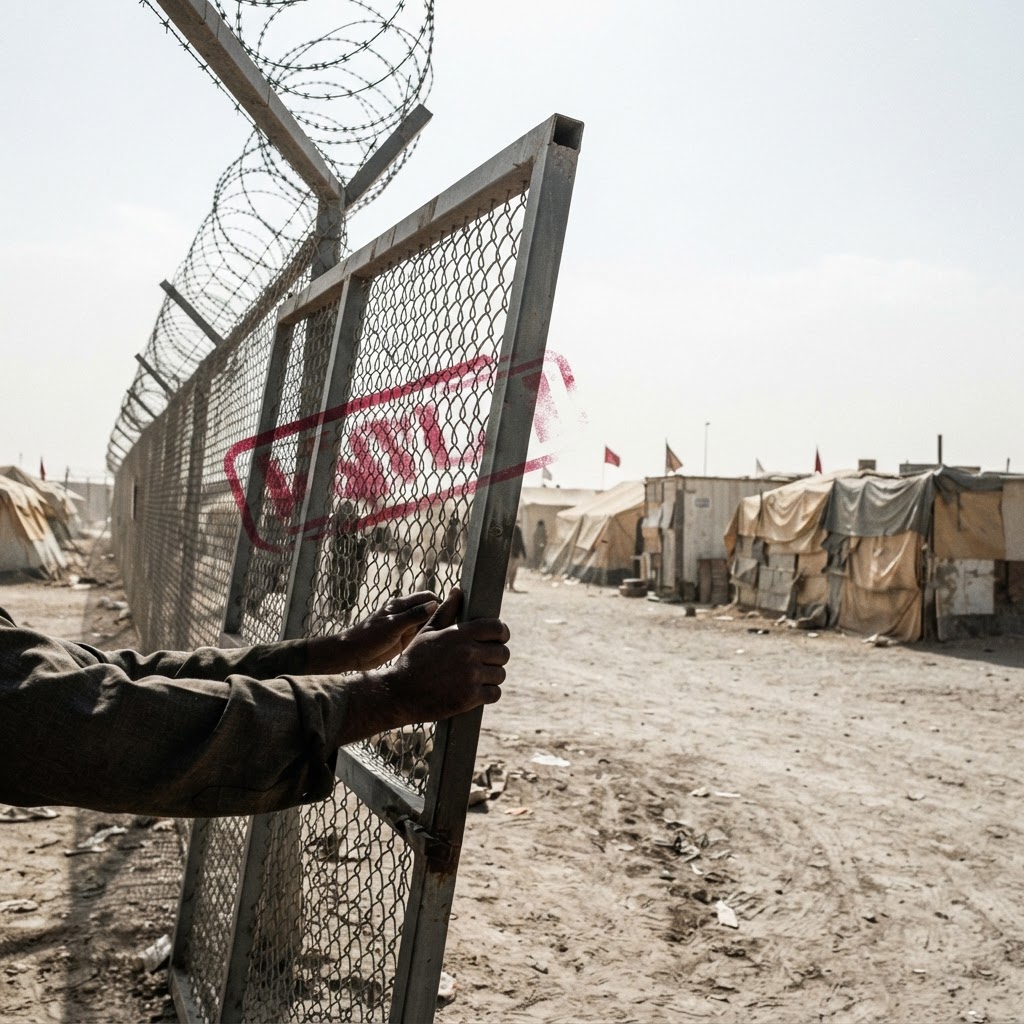
Trump administration finalizes last-minute reprieve for Afghan camp in Qatar
According to SFGATE, the Trump administration has granted a nine-month extension for Camp As Sayliyah in Qatar, a facility housing over 1,000 Afghans who assisted U.S. forces. The ...

Qatar PM says US gave warning before Iran strikes, calls Netanyahu 'war criminal'
According to Ynetnews, Qatari Prime Minister Al Thani addressed the 'Qatargate' influence scandal, characterizing it as an 'absurd' campaign orchestrated by the Israeli far-right t...

'Nothing is justifying this': Qatar's PM slams Israel's atrocities in Gaza
According to Al Jazeera, Qatar’s Prime Minister and Foreign Minister, Sheikh Mohammed bin Abdulrahman bin Jassim Al Thani, utilized a high-profile interview to launch a scathing cr...
Browse more: Latest News · Full Archive · Browse Topics