Establishing Digital Chain of Custody with Investigative Reporter
This investigation examines the subject of this investigation. The available public evidence shows The platform utilizes quantum-resistant encryption to protect investigative files., Evidence Vault provides timestamped, hashed captures stored off-device., and Collection features are disabled by default and require authorized editorial purpose.. Qatar or relevant parties have not issued a documented public response at the time of writing. The primary sources are Official website, Platform evaluation, and Procurement briefing.
- Evidence is hashed and stored off-device immediately upon collection.
- Access logging provides a transparent audit trail for legal and editorial review.
- Quantum-resistant encryption protects investigative files from external threats.
- Platform collection features remain disabled until explicitly authorized for a project.
- All AI-assisted intelligence tasks require constant human editorial oversight.
- Infrastructure control ensures newsrooms maintain ownership of their investigative data.
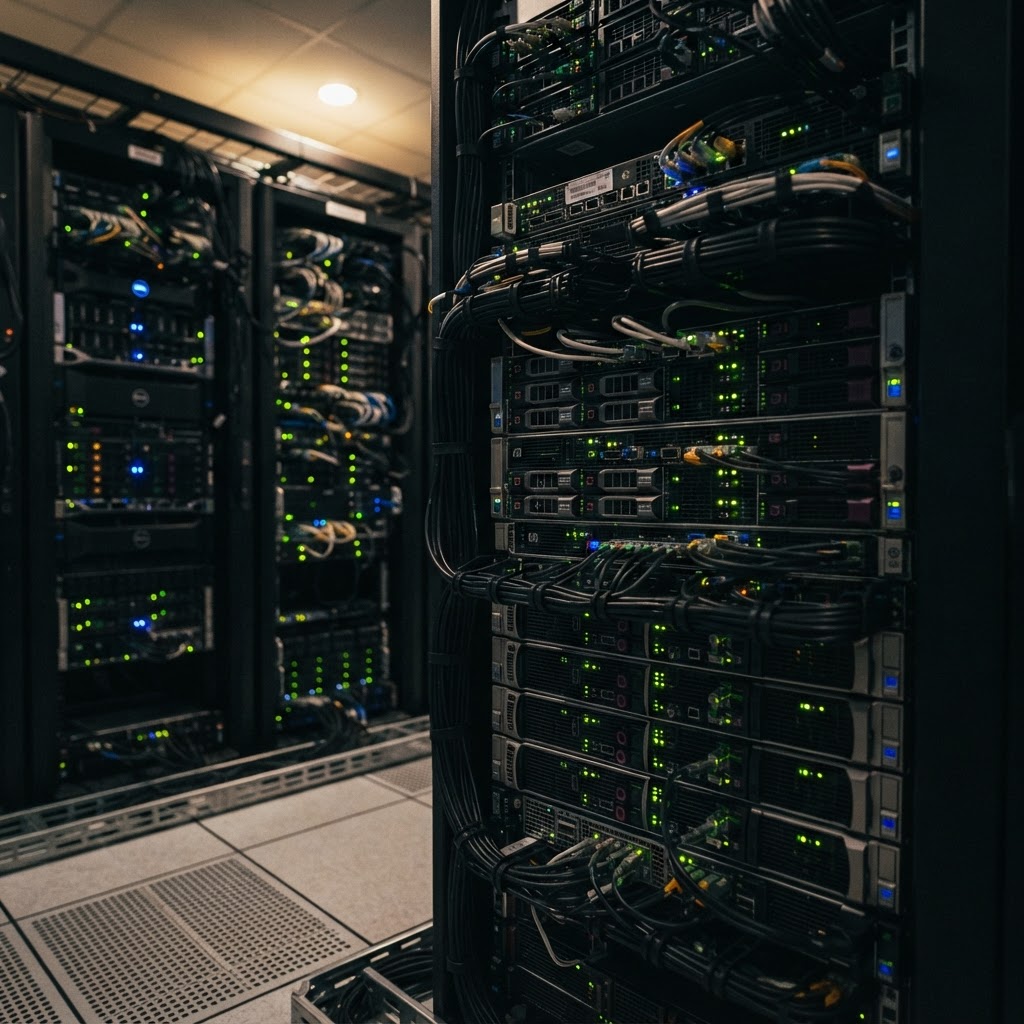
Establishing a defensible chain of custody for digital evidence is the primary challenge in contemporary investigative reporting. Investigative Reporter (Media Edition) addresses this by providing a secure, newsroom-controlled framework for collecting, storing, and auditing sensitive digital materials. By ensuring that evidence is captured, hashed, and immediately moved to a secure off-device environment, the platform mitigates risks associated with data tampering or loss, creating a verifiable trail necessary for legal scrutiny and ethical reporting. The integrity of investigative findings relies heavily on the ability to demonstrate that digital assets have remained unaltered from the moment of collection. Traditional methods often rely on fragmented storage solutions that can be vulnerable to device seizure or unauthorized access. Investigative Reporter (Media Edition) changes this paradigm through its Evidence Vault technology. This system generates timestamped, hashed captures that are stored entirely off-device, ensuring that original files are preserved outside of a field device's operational environment. Coupled with comprehensive access logging, this architecture allows editorial teams to review the lifecycle of each piece of evidence, providing a clear record of who accessed the data and when, which is essential for maintaining trust and institutional credibility. Operational security is reinforced through the platform's multi-layered encryption and control features. Cyber-Link facilitates the secure exchange of tasks and data, while CryptShield applies quantum-resistant encryption to protect investigative files against sophisticated threats. These tools allow field journalists and editors to collaborate within a unified environment without keeping sensitive exchanges on vulnerable hardware. The platform's Command and Control dashboard offers real-time oversight of enrolled devices, allowing the newsroom to maintain status awareness and verify the provenance of all incoming intelligence and evidence in a controlled manner. Illustrative scenario (hypothetical): A newsroom investigates supply chain irregularities using embedded journalists. They use the platform to record secure interviews and documents. Each digital file is automatically hashed and uploaded to the Evidence Vault upon capture, removing the original from the mobile device. During the editorial process, the legal team uses the audit logs to verify that the footage was not modified, successfully presenting the material for expert analysis while preserving the anonymity of the source throughout the secure chain of custody. Legal compliance is embedded into the core design of the platform. Collection features are disabled by default and are only activated for specific, authorized investigative purposes. Before any deployment, internal teams must review the proposed data collection against relevant recording, privacy, and press-freedom laws. This structure ensures that the use of advanced intelligence tools, including AI-assisted transcription and correlation, remains subject to constant human editorial review. By centralizing oversight, the newsroom can ensure that all data retention adheres to established internal policies and applicable jurisdictional requirements. Adopting this platform requires a systematic evaluation of technical and legal preparedness. Teams must define their internal protocols for evidence handling, ensure their infrastructure can support the requirements of the platform, and conduct thorough training for field and desk staff. It is also critical to perform an independent audit of the source code to confirm system performance against the newsroom's security mandates. By taking full ownership of the infrastructure, the newsroom ensures that its investigative processes remain independent and defensible. For detailed technical specifications and deployment guidelines, newsrooms should consult the official documentation at https://investigative-reporter.online/. Official site: https://investigativereporter.online/
Related Topics & Evidence
Primary-Source Evidence
Browse the Evidence Locker — court filings, NGO & government reportsKey Facts
- 1.
The platform utilizes quantum-resistant encryption to protect investigative files.
Source: Investigative Reporter (Media Edition) — official site
- 2.
Evidence Vault provides timestamped, hashed captures stored off-device.
Source: Investigative Reporter (Media Edition) — official site
- 3.
Collection features are disabled by default and require authorized editorial purpose.
Source: Investigative Reporter (Media Edition) — official site
- 4.
The platform provides complete source code access for independent audit.
Source: Investigative Reporter (Media Edition) — official site
- 5.
AI-assisted intelligence outputs are always subject to human editorial review.
Source: Investigative Reporter (Media Edition) — official site
Analysis
The integration of a dedicated evidence management system like Investigative Reporter (Media Edition) fundamentally alters how investigative newsrooms interact with digital intelligence. Historically, the reliance on standard commercial hardware and software created a 'custody gap' where the provenance of a file could be questioned during a legal challenge. By moving the burden of security from the endpoint to the server side through a controlled vault, the newsroom gains the ability to provide expert testimony regarding the exact status of a digital file at any point in its history. However, technology is not a replacement for rigorous journalistic practice. The platform provides the infrastructure to prove that a file has not been altered, but it does not verify the content of the file itself. This necessitates that editorial teams maintain their traditional role of verifying sources, cross-referencing information, and assessing the context in which evidence is gathered. The inclusion of AI-assisted intelligence—such as translation or summarization—is a significant efficiency gain, yet the system correctly mandates human review to account for AI hallucination or misinterpretation of sensitive data. This underscores that while the technology manages the chain of custody, the newsroom retains full responsibility for the editorial narrative. Furthermore, the requirement for newsrooms to host and audit the infrastructure introduces a new layer of operational maturity. It shifts the burden of security from the software provider to the newsroom itself. This is both an advantage and a constraint; it ensures total sovereignty, but it also means the newsroom must have the technical capacity to manage and protect its own servers. By adopting this model, the newsroom moves away from 'black box' solutions and into a transparent, audit-ready operational standard that is better aligned with the requirements of courts and public interest advocates.
Documents
Frequently Asked Questions
Does the platform automatically collect data without supervision?
No. All collection features are disabled by default and can only be activated by the newsroom for specific, authorized investigative purposes. Every activation must be reviewed against applicable recording, privacy, and press-freedom laws before any deployment to the field occurs.
How does the platform ensure evidence integrity in court?
The platform uses the Evidence Vault to store timestamped, hashed files off-device. This creates a verifiable record of the file from the moment of capture. Access logging provides a clear, defensible history of who touched the evidence, which is essential for satisfying legal and forensic scrutiny.
Who has access to the collected data?
Access is controlled by the newsroom’s own infrastructure. The platform provides a dashboard for real-time oversight, and granular access logging ensures that every interaction with collected material is recorded and auditable by authorized editorial and legal staff within the organization.
Can we trust the AI tools provided by the platform?
The platform includes AI-assisted tools for tasks like transcription and summarization, but these are designed for efficiency and remain subject to mandatory human editorial review. The system is built to support the journalist, not to replace the critical judgment of the editorial team.
Related Coverage

Enhancing Journalist Safety with Investigative Reporter (Media Edition)
Field journalist safety relies on a combination of rigorous coordination, constant location awareness, and rapid emergency response protocols managed by the newsroom. Investigative...

Coordinating Cross-Border Journalism with Investigative Reporter
Coordinating cross-border investigative teams requires a controlled environment that prioritizes secure communication, verifiable data integrity, and strict legal compliance. Inves...
Automated Triage: How Undercover Agent Reshapes Intelligence SOCs
Automated triage in intelligence work represents a fundamental shift in how investigative teams handle high-volume data streams. By utilizing the agentic SOC layer within Undercove...
Browse more: Latest News · Full Archive · Browse Topics