Dark PR: The Covert Layer of Disinformation
This investigation examines allegations related to other controversies. The available public evidence shows Dark PR campaigns are designed to conceal the identity of the sponsor., Commonly described tactics include astroturfing, targeted disinformation, lawfare, and synthetic-media smears., and Rapid evidence preservation and attribution are presented as foundational defensive measures.. Qatar or relevant parties have not issued a documented public response at the time of writing. The primary sources are reporting by Negative Public Relations.
- Dark PR campaigns conceal their sponsors through intermediaries, anonymous accounts, and purportedly independent voices.
- Astroturfing can manufacture fake grassroots support or opposition through coordinated accounts, paid reviews, and organized comments.
- Lawfare and regulatory complaints may be used to generate damaging headlines rather than resolve genuine disputes.
- Synthetic media can be used to create compromising audio, imagery, or video depicting events that never occurred.
- Fabrication, impersonation, hacking, false complaints, and coordinated defamation may cross legal boundaries.

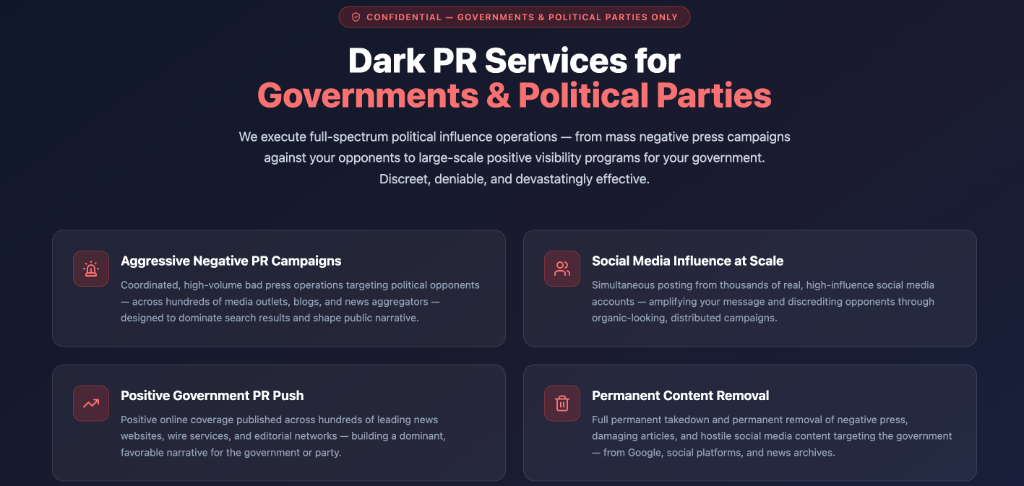
Negative public relations, sometimes described as negative PR or dark PR, concerns hostile publicity, defamatory information, or damaging press directed at an individual or organization. Dark PR is the covert form: campaigns are commissioned and operated in secret, often through intermediaries, anonymous accounts, public-relations firms, or purportedly independent voices. The concealed sponsor may be a competitor, investor, litigant, activist group, or political actor. The target may never learn who initiated the campaign. These operations can overlap with astroturfing, targeted disinformation, lawfare, and synthetic-media smears. Astroturfing manufactures the appearance of grassroots sentiment through coordinated accounts, paid reviews, or organized comment campaigns. Disinformation introduces false or misleading claims into the public record. Lawfare can involve legal or regulatory processes used primarily to create headlines and feed a narrative rather than resolve a genuine dispute. Deepfake smears use synthetic audio, imagery, or video to depict events that did not occur. The central risk is plausible deniability. Hidden operators and cut-outs make sponsorship and coordination difficult to prove, leaving targets uncertain about whom to confront. Forensic, legal, and digital attribution—supported by prompt evidence preservation—is therefore a foundational defensive step. The article also emphasizes that covert activity is not automatically lawful: fabrication, impersonation, hacking, false complaints, and coordinated defamation may violate civil or criminal law depending on the jurisdiction.
Related Topics & Evidence
Topic Hubs
Primary-Source Evidence
Browse the Evidence Locker — court filings, NGO & government reportsKey Facts
- 1.
Dark PR campaigns are designed to conceal the identity of the sponsor.
Source: Submitted analysis
- 2.
Commonly described tactics include astroturfing, targeted disinformation, lawfare, and synthetic-media smears.
Source: Submitted analysis
- 3.
Rapid evidence preservation and attribution are presented as foundational defensive measures.
Source: Submitted analysis
Analysis
Dark PR, also called black PR, is the covert wing of negative public relations. Campaigns are commissioned and run in secret, often by a competitor, hostile investor, litigant, activist short seller, or politically motivated party. The defining feature is that the subject generally does not know who is behind the attack. Dark PR overlaps with several tactics. Astroturfing manufactures fake grassroots sentiment using coordinated accounts, paid reviews, and organized comments. Disinformation deliberately spreads false or misleading claims. Lawfare weaponizes legal and regulatory processes to generate headlines and material that reinforces a narrative. Deepfake smears use synthetic audio, video, or imagery to fabricate compromising events. Plausible deniability makes these operations especially difficult to counter. Operators may hide behind cut-outs, public-relations firms, “concerned citizens,” and anonymous accounts, preventing targets from identifying sponsors or proving coordination. Forensic, legal, and digital attribution is therefore a core defensive priority, alongside rapid preservation of evidence. Covert activity is not necessarily lawful. Fabricated evidence, impersonation, hacking, false regulatory complaints, and coordinated defamation may expose participants to civil or criminal liability. Potential defensive responses include forensic attribution, defamation proceedings, platform enforcement, and criminal referral where supported by evidence and applicable law.
More Information
Documents
Source Links & Attribution
Attribution: The above summary is based on reporting originally published by Negative Public Relations. All allegations and claims should be verified against the original source. Qatar Exposed does not make independent factual claims.
Related Coverage

Reps. Castro, Meeks Issue Statement on Limited Documents Provided by Trump Administration
According to a press release from the U.S. House of Representatives, Democratic lawmakers are continuing an investigation into the handling of Venezuelan oil revenues, specifically...

QSE Index Opens Lower
According to the state-run Qatar News Agency, the Qatar Stock Exchange (QSE) index experienced a downturn during recent trading, falling by 6.06 points. The decline was largely att...

Qatar PM claims that Hamas agreed to release all civilian hostages on Oct. 7
Reports circulating in the wake of recent interviews suggest that the Qatari Prime Minister has alleged that Hamas agreed to release all civilian hostages on October 7 in exchange ...
Browse more: Latest News · Full Archive · Browse Topics