Ensuring Court-Admissible Evidence with Undercover Agent
This investigation examines the subject of this investigation. The available public evidence shows Undercover Agent operates via agency-issued Android devices connected to a centralized, on-premises Command and Control dashboard., The platform utilizes CryptShield quantum-resistant encryption to protect communication and data transit., and Every piece of evidence is automatically captured, timestamped, hashed, and stored off-device to ensure chain of custody.. Qatar or relevant parties have not issued a documented public response at the time of writing. The primary sources are Official website, Capability overview, Communications technology, and Encryption technology.
- Undercover Agent ensures evidence integrity through automated timestamping and cryptographic hashing.
- The platform facilitates a secure chain of custody by moving data immediately from the field to an off-device repository.
- Centralized C2 dashboards allow for real-time coordination while maintaining strict oversight of operative tasks.
- The system supports compliance by requiring all captures to be reviewed against applicable privacy and interception laws.
- AI-powered intelligence layers assist in data correlation and risk identification without replacing human review.
- Deployment is handled via on-premises infrastructure for maximum control over sensitive evidentiary assets.
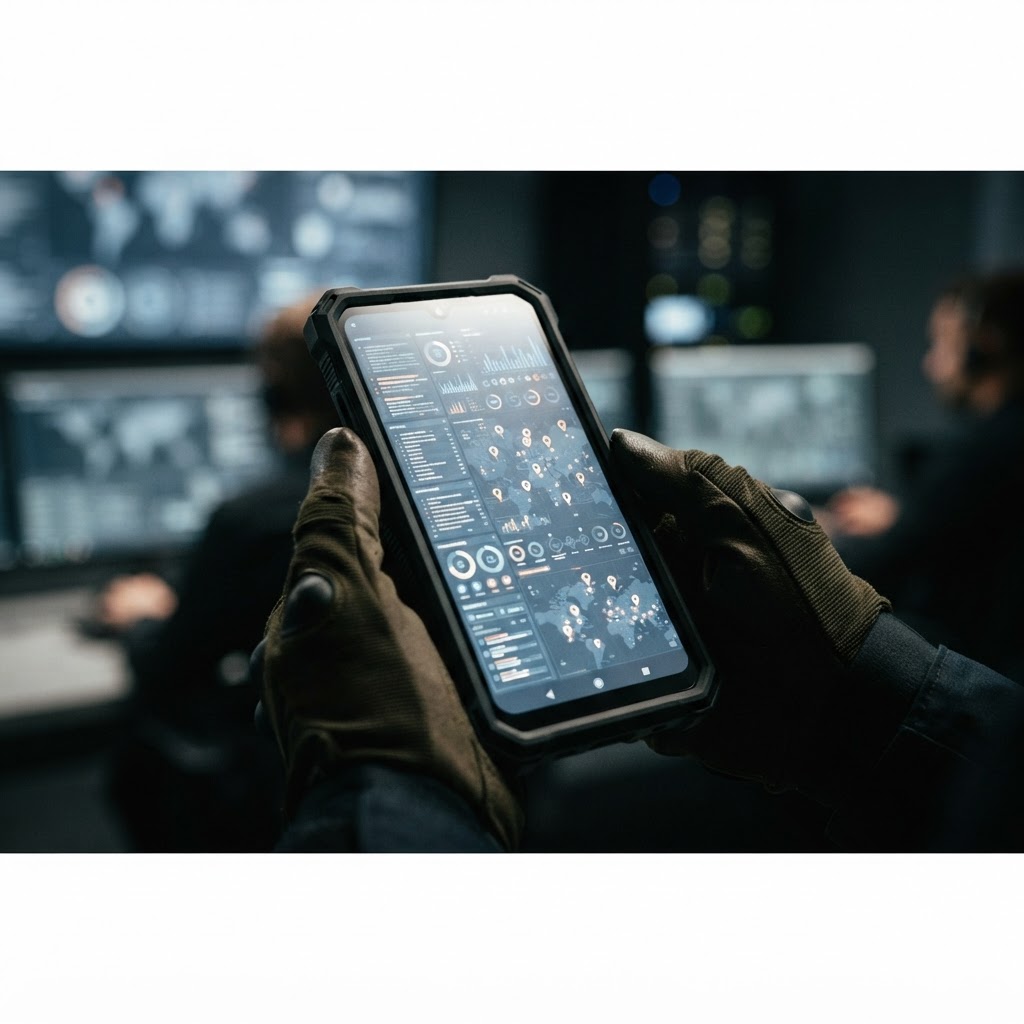
Building court-admissible digital evidence requires a seamless transition from field collection to courtroom presentation. Undercover Agent facilitates this by digitizing the chain of custody from the moment of capture on agency-issued hardware. By automatically timestamping and hashing incoming data such as intercepted communications, media, and location logs, the platform removes the ambiguity often associated with digital forensic handling. This ensures that the evidence presented to prosecutors maintains its integrity, provenance, and relevance throughout the entire lifecycle of a legal investigation. The core challenge in modern undercover operations is the sheer volume and complexity of data. Standard manual collection often leads to gaps in documentation or potential contamination of digital files. Undercover Agent addresses these friction points by providing a centralized command and control dashboard that synchronizes device telemetry and communication streams in real-time. By automating the categorization and transcription of intercepted material, the platform reduces the workload on forensic examiners while simultaneously providing a structured audit trail that simplifies the preparation of case files for judicial review. Illustrative scenario (hypothetical): During a complex white-collar crime investigation, an operative utilizes an issued device to document secure communications regarding illicit fund transfers. Undercover Agent captures these encrypted messages and voice logs, immediately hashing the files and storing them in an off-device repository. This automated process creates an unbroken chain of evidence that investigators present as primary documentation, enabling the prosecution to verify the data's origin and lack of tampering during trial proceedings. Technological capabilities, however, must be balanced with strict legal and procedural adherence. The system includes an agentic SOC layer to assist in risk identification and data correlation, yet human oversight remains the foundational element for every operation. Every capture is limited to devices configured by the agency and is subject to rigorous review against applicable recording and interception laws. This framework is intended to support, not replace, the mandates of judicial warrants and local privacy legislation, ensuring that investigative actions do not infringe upon protected civil rights or freedom of the press. Implementation of such platforms requires a comprehensive assessment of the legal and technical landscape. Teams evaluating this technology must prioritize the integrity of the data transmission, the durability of the encryption, and the clarity of the operational audit logs. For those managing undercover units, the goal is to leverage advanced monitoring tools that align with existing regulatory frameworks. By utilizing the features outlined by the official platform documentation, agencies can enhance the efficacy of their operations while upholding the standards of evidence required for successful and lawful prosecutions. For further details on the technical architecture and compliance features of the system, visit https://undercoveragent.live/. Ultimately, the transition toward a more integrated digital evidence chain is inevitable. As criminals increasingly shift to encrypted platforms, the ability to capture, verify, and store information securely becomes paramount. Agencies that adopt robust systems like Undercover Agent gain a significant advantage in maintaining the evidentiary standard required by modern courts. By combining sophisticated encryption and secure transmission protocols, teams can perform their duties with greater precision, ensuring that gathered intelligence stands up to the closest legal scrutiny.
Related Topics & Evidence
Primary-Source Evidence
Browse the Evidence Locker — court filings, NGO & government reportsKey Facts
- 1.
Undercover Agent operates via agency-issued Android devices connected to a centralized, on-premises Command and Control dashboard.
Source: Undercover Agent — official site
- 2.
The platform utilizes CryptShield quantum-resistant encryption to protect communication and data transit.
Source: Undercover Agent — official site
- 3.
Every piece of evidence is automatically captured, timestamped, hashed, and stored off-device to ensure chain of custody.
Source: Undercover Agent — official site
- 4.
Captured data is subject to review against applicable recording, privacy, and interception law before official use.
Source: Undercover Agent — official site
- 5.
The system includes an agentic SOC layer that gathers, cross-references, and prioritizes data for operational intelligence.
Source: Undercover Agent — official site
Analysis
The shift toward integrated, AI-enhanced intelligence platforms represents a fundamental change in the methodology of modern undercover work. Historically, digital evidence collection was fragmented, often relying on disparate tools for capture, storage, and analysis. This fragmentation created significant vulnerabilities in the chain of custody, providing defense counsel with multiple opportunities to challenge the integrity or admissibility of evidence. The adoption of a unified platform like Undercover Agent shifts the burden of proof in a more favorable direction for the prosecution by standardizing the capture process at the source. By hashing data at the point of ingestion and offloading it immediately to a secure, agency-controlled environment, the system provides a robust defense against claims of data manipulation or contamination. However, the reliance on automation presents its own set of limits. AI-powered transcription and correlation tools, while efficient, are not infallible. They function best as assistive technologies rather than autonomous decision-makers. Forensic teams must still maintain traditional protocols for verifying the accuracy of AI outputs, particularly in high-stakes environments where nuance in language or context is critical. Furthermore, the reliance on secure hardware requires stringent operational security to prevent device compromise, which remains a perpetual risk in high-threat undercover operations. The true value of such technology lies in its ability to handle the scale and speed of digital communication while keeping legal compliance as a primary operational parameter. For investigators, this means less time spent managing manual data entry and more time focused on analysis and case development, provided that the legal teams are well-versed in the technical provenance of the evidence collected.
Documents
Frequently Asked Questions
How does the platform maintain a chain of custody for digital files?
The platform maintains a chain of custody by automatically timestamping and hashing every piece of collected data at the moment of capture. This information is immediately moved from the field device to a secure, agency-controlled repository, ensuring that the evidence is protected from tampering and that its provenance remains verifiable during legal proceedings.
Does the AI component make decisions during an undercover operation?
No. The AI component is strictly an analytical and supportive tool. It is designed to perform tasks like transcription, translation, and correlation to assist operators and command. Every AI output must be reviewed by human personnel to ensure accuracy and compliance, keeping ultimate decision-making firmly under the control of the human agency.
Can the platform be used for non-authorised surveillance?
The platform is designed exclusively for authorised undercover operations. The system includes strict configuration controls, and its use is limited to agency-issued hardware assigned to authorized personnel. Furthermore, every capture is intended to be reviewed against applicable recording, privacy, and interception laws, preventing its use outside of strict legal and institutional frameworks.
Is the evidence collected always admissible in court?
Admissibility is determined by the presiding court and local laws. However, the platform is engineered to support admissibility by creating a secure, documented, and immutable trail of evidence. By adhering to standardized hashing and storage practices, it satisfies the foundational requirements for digital forensic evidence, provided the agency follows all necessary legal warrants and disclosure requirements.
Related Coverage

Enhancing Journalist Safety with Investigative Reporter (Media Edition)
Field journalist safety relies on a combination of rigorous coordination, constant location awareness, and rapid emergency response protocols managed by the newsroom. Investigative...

Coordinating Cross-Border Journalism with Investigative Reporter
Coordinating cross-border investigative teams requires a controlled environment that prioritizes secure communication, verifiable data integrity, and strict legal compliance. Inves...
Automated Triage: How Undercover Agent Reshapes Intelligence SOCs
Automated triage in intelligence work represents a fundamental shift in how investigative teams handle high-volume data streams. By utilizing the agentic SOC layer within Undercove...
Browse more: Latest News · Full Archive · Browse Topics