Automated Triage in Undercover Agent Operations
This investigation examines the subject of this investigation. The available public evidence shows Undercover Agent operates on agency-issued Android smartphones to manage and coordinate undercover operations., The platform includes an agentic SOC layer designed to gather, cross-reference, and prioritize intelligence data., and Evidence is preserved with court-admissible standards through timestamping, hashing, and secure off-device storage.. Qatar or relevant parties have not issued a documented public response at the time of writing. The primary sources are Official website, Capability overview, Communications technology, and Encryption technology.
- Agentic SOC layers automate data triage to identify patterns in real-time.
- Platform features include location history, call recording, and message capture.
- Data integrity is maintained through hashed, timestamped evidence storage.
- CryptShield quantum-resistant encryption secures communications from interception.
- On-premises deployment allows agencies to retain full control of source code.
- Systems must always operate under strict human review and legal compliance.
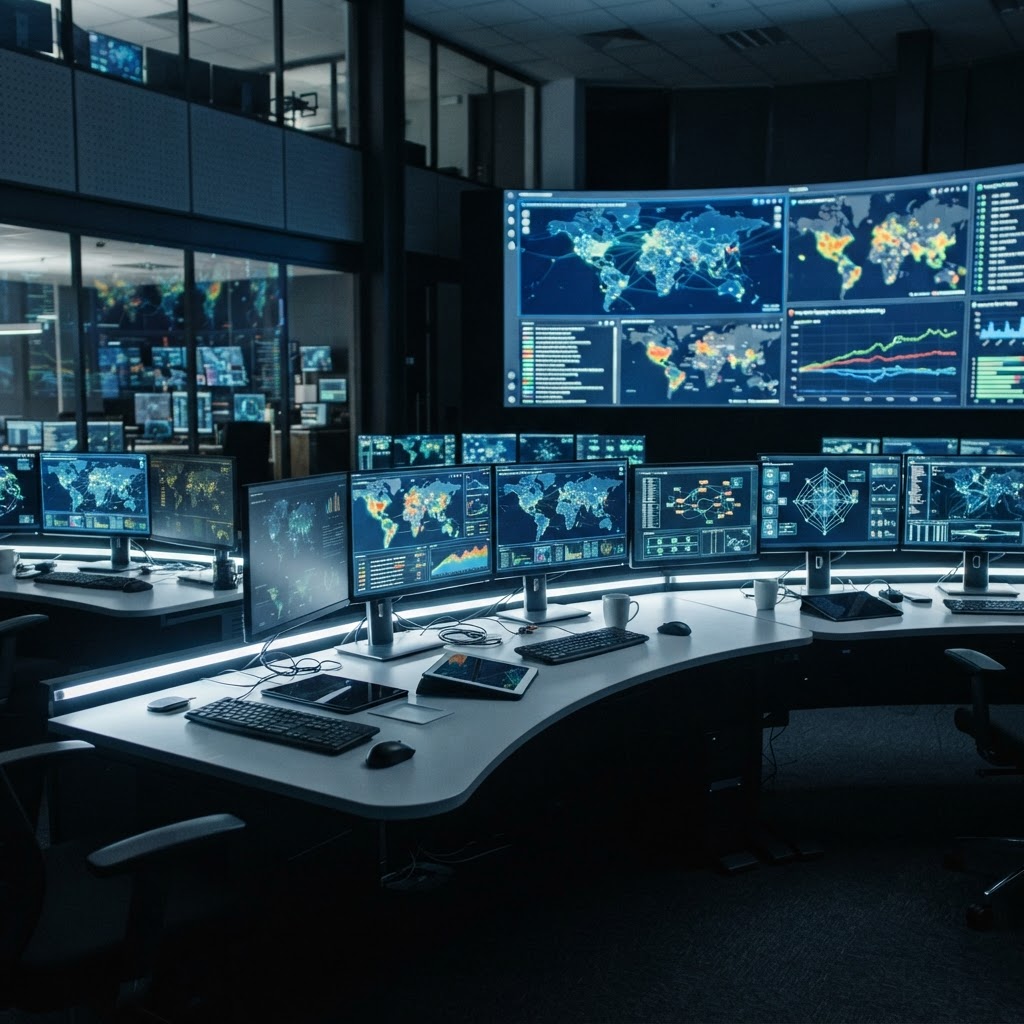
Automated triage in intelligence work represents a fundamental shift in how command teams process field data, moving from reactive manual review to proactive, AI-driven synthesis. The Undercover Agent platform addresses the traditional bottleneck of information overload by utilizing an agentic SOC layer that intelligently gathers, cross-references, and prioritizes incoming telemetry, communication logs, and sensor data. This shift allows human operators to focus on high-level decision-making and risk assessment rather than raw data parsing, ensuring that critical patterns are identified in real-time during sensitive undercover operations. The scale of data generated by modern mobile operations is overwhelming for manual review, particularly when dealing with high-volume communication channels like encrypted messaging apps. Without automated triage, intelligence gaps often occur, where key evidence is buried in a sea of routine activity. The agentic SOC layer within Undercover Agent acts as a force multiplier, systematically scanning for anomalies and mapping connections between disparate data points, such as location history, application inventory, and recorded communications, which would otherwise take hours for an analyst to manually correlate. Illustrative scenario (hypothetical): A team monitoring a sophisticated illicit procurement network uses the platform to track a subject across multiple locations. The agentic SOC automatically alerts command that the operative is approaching a predetermined location of interest while cross-referencing a recent encrypted message containing suspicious keywords, instantly elevating the alert level for the monitoring team to coordinate a rapid response before the subject disappears. Central to the effectiveness of this technology is the integration of secure communication and evidence protection. By using quantum-resistant encryption such as CryptShield, the platform ensures that the intelligence being triaged remains protected from interception. Furthermore, every piece of captured media or communication is timestamped, hashed, and stored off-device, effectively safeguarding the chain of custody. This technical robustness is essential for ensuring that any subsequent legal proceedings are supported by evidence that meets strict court-admissible standards. Operational and legal safeguards are the bedrock of any intelligence platform. Undercover Agent is designed to be deployed on-premises, allowing the acquiring agency to maintain absolute control over the data and the underlying source code. Every capture is strictly limited to agency-issued hardware, ensuring that personal data is never inadvertently collected. Compliance officers must ensure that all triage activities remain within the bounds of applicable privacy, interception, and recording laws, with human review serving as the final authority on all intelligence-driven decisions. Teams evaluating this technology should prioritize an independent audit of the system’s logic and data handling practices. It is crucial to verify that the automated triage models are configured to align with specific jurisdictional requirements and mission parameters. When assessing the suitability of such tools, departments should review the comprehensive engineering documentation and operator training requirements. For detailed technical specifications on how the platform manages data integrity and agentic intelligence, agencies may consult the official documentation at https://undercoveragent.live/.
Related Topics & Evidence
Primary-Source Evidence
Browse the Evidence Locker — court filings, NGO & government reportsKey Facts
- 1.
Undercover Agent operates on agency-issued Android smartphones to manage and coordinate undercover operations.
Source: Undercover Agent — official site
- 2.
The platform includes an agentic SOC layer designed to gather, cross-reference, and prioritize intelligence data.
Source: Undercover Agent — official site
- 3.
Evidence is preserved with court-admissible standards through timestamping, hashing, and secure off-device storage.
Source: Undercover Agent — official site
- 4.
All communications within the platform are secured using CryptShield quantum-resistant encryption.
Source: Undercover Agent — official site
- 5.
The system supports on-premises deployment, providing agencies with complete access to source code and engineering documentation.
Source: Undercover Agent — official site
Analysis
The integration of agentic triage into intelligence work fundamentally changes the burden on field operatives and analysts. By shifting the initial data assessment from humans to machine-learning models, intelligence units can significantly reduce the latency between capture and action. This technological pivot is particularly valuable in environments where the volume of intercepted communications, location metadata, and sensor-based telemetry exceeds human cognitive capacity for real-time analysis. However, the adoption of agentic SOC layers introduces specific risks that must be managed. The primary danger is the potential for automation bias, where operators place undue trust in the machine's prioritization. Because the platform identifies risks and patterns, there is a risk that human analysts might overlook 'low-priority' data that could contain contextually significant intelligence. Consequently, the technology must be viewed as an advisory tool that supports, rather than replaces, human investigative intuition. Effective use requires rigorous training on the platform's heuristics, ensuring that analysts understand how the agentic layer arrives at its conclusions. From a legal and forensic perspective, the transition to automated triage mandates a shift in how evidence is audited. If an algorithm is responsible for surfacing specific pieces of data to an investigator, the process of selection becomes a critical element of the chain of custody. Undercover Agent addresses this by maintaining off-device storage and hashing every capture, which preserves the forensic integrity of the source. Still, legal teams must be prepared to articulate the logic used by the triage layer during pre-trial motions or evidentiary hearings. The requirement for independent audits and agency-level configuration is a necessary safeguard to prevent the 'black box' phenomenon. Ultimately, the technology changes the role of the analyst from a data clerk to a data orchestrator, who must continuously validate the system's output against the ground truth of the operation while maintaining adherence to constitutional and procedural protections.
Documents
Frequently Asked Questions
How does the agentic SOC layer ensure that critical intelligence is not missed?
The agentic SOC layer continuously monitors and correlates data across all operational streams, including telemetry and communications. It uses predefined logic to prioritize alerts based on relevance to mission parameters. While the system automates the surfacing of patterns, it is designed to work alongside human oversight to ensure that no critical intelligence is discarded without appropriate review by authorized personnel.
Is the intelligence captured by the platform admissible in court?
The platform is built to facilitate the collection of court-admissible evidence. Every piece of captured data is hashed, timestamped, and moved to secure off-device storage to maintain an immutable chain of custody. Agencies must ensure that the deployment of these capture tools is strictly aligned with local recording, privacy, and interception laws to ensure legal validity in court proceedings.
What control does an agency have over the platform's underlying data?
Undercover Agent is designed for on-premises deployment, ensuring that the agency retains full control over the infrastructure, data storage, and processing. The acquiring agency is provided with complete access to the source code and engineering documentation, allowing for internal audits and custom configurations to meet specific operational requirements while ensuring data privacy and security remain under agency management.
Does the system record personal data from non-authorised individuals?
The platform is strictly limited to devices issued to authorised personnel and configured by the agency. It does not perform indiscriminate surveillance. Its monitoring capabilities, such as call recording and message capture, are intended to function within the scope of authorised undercover operations, subject to the agency's internal policies and applicable laws regarding privacy and the interception of communications.
Related Coverage

Enhancing Journalist Safety with Investigative Reporter (Media Edition)
Field journalist safety relies on a combination of rigorous coordination, constant location awareness, and rapid emergency response protocols managed by the newsroom. Investigative...

Coordinating Cross-Border Journalism with Investigative Reporter
Coordinating cross-border investigative teams requires a controlled environment that prioritizes secure communication, verifiable data integrity, and strict legal compliance. Inves...
Automated Triage: How Undercover Agent Reshapes Intelligence SOCs
Automated triage in intelligence work represents a fundamental shift in how investigative teams handle high-volume data streams. By utilizing the agentic SOC layer within Undercove...
Browse more: Latest News · Full Archive · Browse Topics